
Elizabeth Birkelund's Novel, A Northern Light in Provence translates Place, Language and Love.
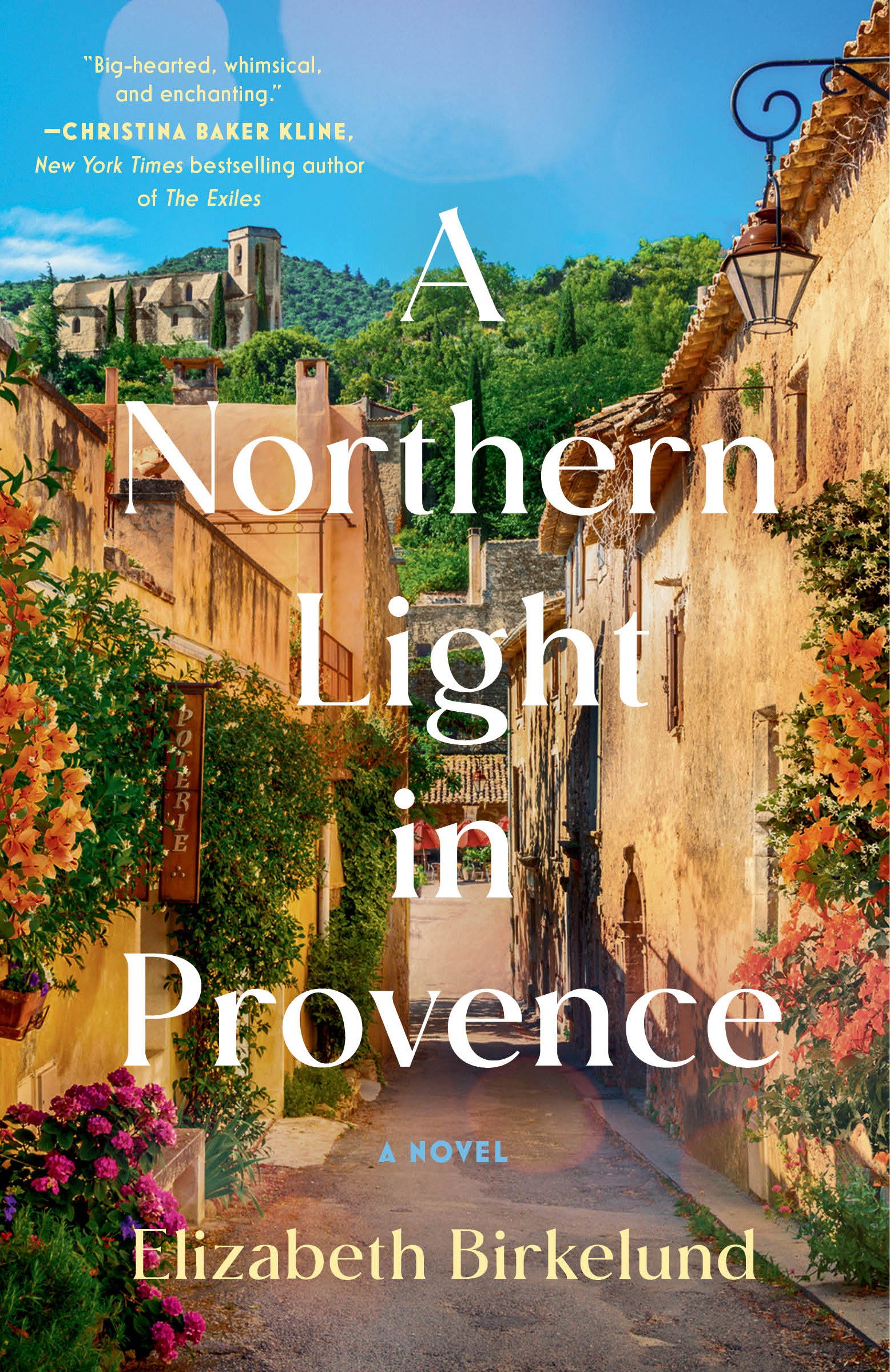
Translating Place, Language, and Love in A Northern Light in Provence
Some novels transport readers not just across geography, but across inner landscapes—awakening longings, questions, and dreams we may have tucked away. Elizabeth Birkelund’s novel A Northern Light in Provence is one such book. Through the journey of Ilse Erlund, a translator from Greenland who travels to Provence, Birkelund explores themes of language, identity, love, and the courage it takes to leave the known for the unknown.
At the heart of the novel lies Birkelund’s lifelong fascination with translation—not merely as a technical act, but as an emotional and cultural one. “Translation is not math,” she explains. “It’s not one plus one equals two. It’s one plus one equals a hundred.” Something is always lost, something else gained. That mystery inspired her to create a protagonist whose work is translating French texts into English and Danish, allowing Birkelund to explore how meaning, intimacy, and connection shift across languages.
But language is only one form of translation in this novel. Place itself becomes something Ilse must translate—moving from the stark, ice-bound world of Greenland to the sunlit sensuality of Provence.
From Arctic Ice to Provencal Light
Birkelund has traveled nearly every year since 2015 to a hilltop village in Provence, and her love for the region permeates the book. She vividly recalls the village’s café culture, where locals gather for morning coffee and evening glasses of Ricard; the weekly open-air markets bursting with color and scent; and the sweeping views of the Luberon mountains. She knew this setting would be transformative for her character.
Readers have described A Northern Light in Provence as “transporting,” which Birkelund considers the highest compliment. The novel opens in Greenland, where Ilse lives in a wind-battered sea captain’s cottage on stilts, surrounded by vast skies, icebergs, and the howling of sled dogs. From there, the story moves south to Provence, tracing Ilse’s emotional and personal evolution “cell by cell.”
At its core, the novel is about a woman stepping beyond the confines of her familiar life to discover who she is when the borders fall away.
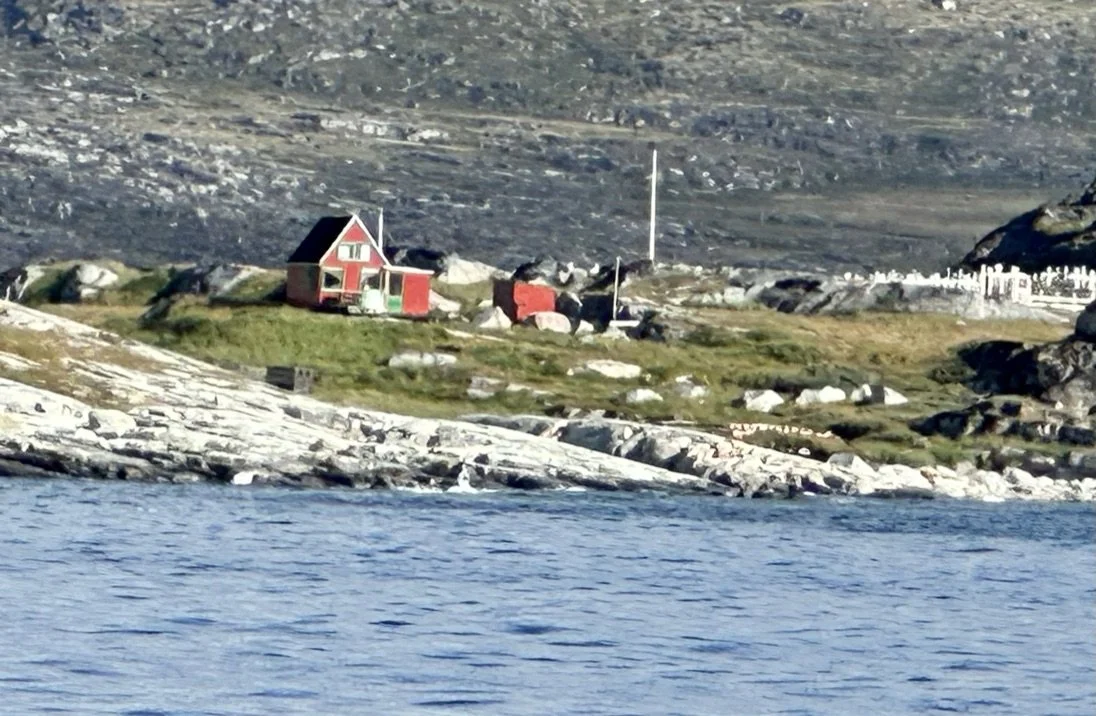
The landscape of Greenland where life is shaped by extreme nature: months of darkness, kaleidoscopic northern lights, sled dogs, fragile Arctic flowers, whales surfacing at sunset, and an ever-present dependence on community for survival.
The Meaning Behind the Title
The novel’s title itself carries layers of meaning. Birkelund originally wanted to call the book Translating Love, a title that reflected both Ilse’s profession and the emotional complexity of relationships. But the publisher requested that “Provence” appear in the title. After brainstorming dozens of options, Birkelund’s agent chose A Northern Light in Provence—a title Birkelund now cherishes.
The “Northern Light” is Ilse herself. During her life in Greenland, Ilse experiences the aurora borealis—magnificent, otherworldly displays that illuminate the long, dark winters north of the Arctic Circle. Those lights become symbolic of Ilse’s inner brilliance, her resilience, and the quiet power she carries with her into an entirely different world.
Restlessness, Longing, and the Risk of Change
Tension propels every compelling novel forward, and in A Northern Light in Provence, that tension is rooted in restlessness and longing. Ilse is thirty-five, an age when questions about love, partnership, and motherhood press more urgently. She lives in a small settlement where everyone knows her story—and her business. While Greenland is home, it is also confining.
Her profession offers a way out. Translation becomes her passport to the wider world, allowing her to leave a country she has never exited and land in a place where she knows no one. What she discovers, as many readers will recognize, is that risk often brings its own rewards. Birkelund echoes Tennyson’s words about Ulysses: Ilse is “strong in will / To strive, to seek, to find, and not to yield.”
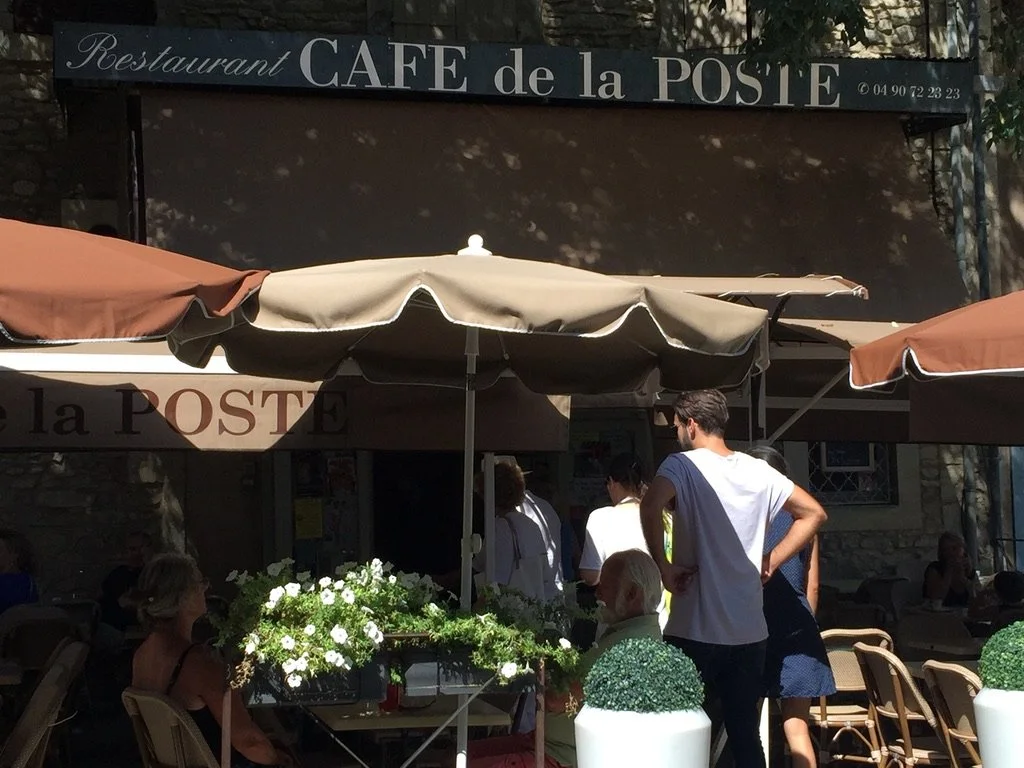
France, the author says, represents a way of life that values pleasure, beauty, food, friendship, and joy—joie de vivre. Provence, in particular, captured her heart instantly. Savour the experience of warm light and fresh bread enjoyed on cafe terraces.
Life Experience as Creative Fuel
Birkelund’s own life experiences deeply inform her writing. Travel, she says, has always been a portal to excitement and discovery. Being immersed in different languages, cultures, and histories awakens her senses and makes her feel most alive. Writing, in turn, becomes another form of travel—a journey into imagined landscapes shaped by memory, curiosity, and the subconscious.
That interplay between lived experience and creative invention gives the novel its authenticity, particularly in its richly drawn settings.
Love, Language, and the Characters Who Carry the Themes
Self-discovery unfolds through Ilse’s relationships as well as her solitude. Romantic love is explored through several characters, each representing a different facet of desire and connection. Geoffrey Labaye, a poet descended from medieval troubadours, embodies idealized, metaphysical love—a shared devotion to words and meaning. His son, Frey, represents physical longing and unattainable passion. Troy, another figure in Ilse’s life, reflects the love she believes she already understands.
Geoffrey’s troubadour lineage is no accident. Troubadours were poets of the Middle Ages who sang of courtly love and chivalry in Provençal, or Occitan—a language now spoken by only a small fraction of France’s population. Ilse’s task of translating Geoffrey’s poetry requires his direct collaboration, and their intimacy grows through the shared dismantling and reimagining of language.
The character of Geoffrey was inspired in part by poet W.S. Merwin, whose work Birkelund admires deeply. Merwin translated troubadour poetry, studied rhythm and sound, and spent time living in Provence—making him a natural influence on the novel.
Greenland as Identity and Origin
Greenland is not merely a backdrop; it is foundational to Ilse’s identity. She comes from Oqaatsuut, a small settlement near Ilulissat, the “capital of icebergs.” Life there is shaped by extreme nature: months of darkness, kaleidoscopic northern lights, sled dogs, fragile Arctic flowers, whales surfacing at sunset, and an ever-present dependence on community for survival.
Birkelund chose Greenland deliberately. As translation was the novel’s central theme, she wanted Ilse to translate not just language, but place. Greenland’s cold, expansive, elemental world stands in stark contrast to Provence’s warmth and sensual abundance. Birkelund also has personal ties to the region through her Danish heritage and the explorer Knud Rasmussen, whose legacy looms large in Greenlandic history.
France, Provence, and a Lifelong Love Affair
Birkelund’s love of France began when she was eight years old, during her first visit to the Côte d’Azur. Since then, she has lived with a French family in Paris, traveled extensively throughout the country, and returned often enough to feel “chez moi.”
France, she says, represents a way of life that values pleasure, beauty, food, friendship, and joy—joie de vivre. Provence, in particular, captured her heart instantly: the church bells, café terraces, warm light, fresh bread, vineyards, and lavender-hued mountains.
It was inevitable that Ilse’s transformation would unfold there.
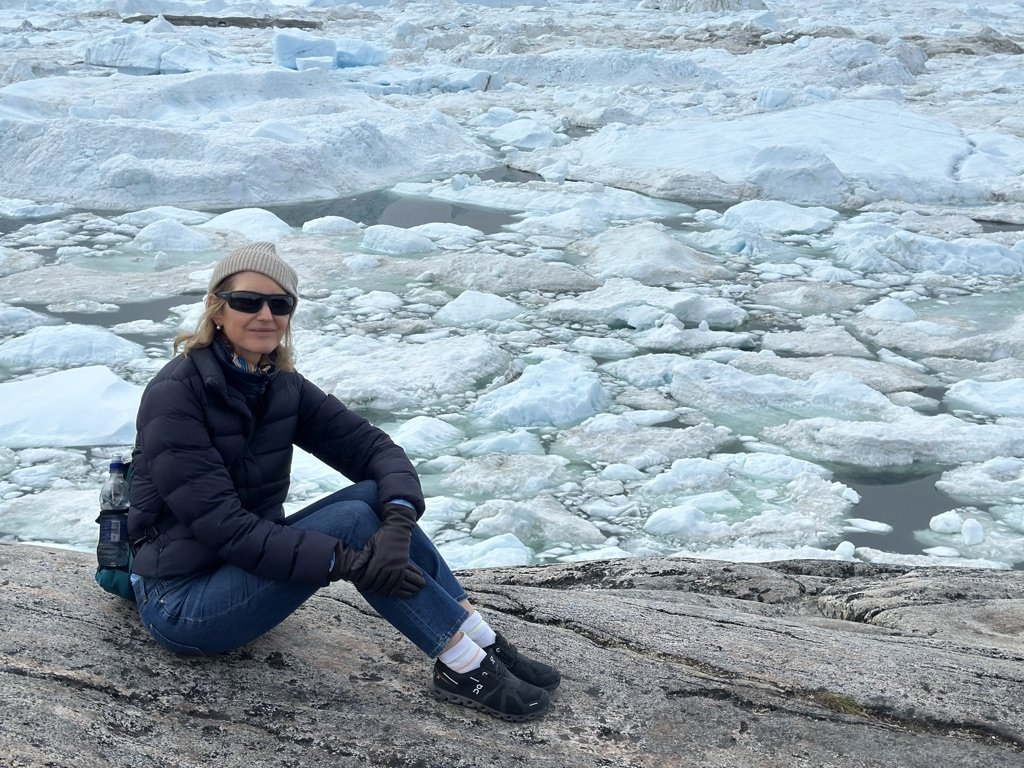
The author, Elizabeth Birkelund, in Greenland on her mission to translate place, language, and love in A Northern Light in Provence
Traveling with Curiosity and Care
Birkelund also offers thoughtful advice for travelers inspired by the novel. In Provence, she recommends avoiding peak summer months, renting an electric bike to explore nearby villages, staying in bed-and-breakfasts to connect with locals, and savoring open-air markets. For Greenland, she advises visiting in August, dressing in layers, staying in Ilulissat, and bearing witness to both breathtaking beauty and the stark realities of climate change.
Translating the Self
Ultimately, A Northern Light in Provence is about translating the self—across borders, languages, and stages of life. It reminds readers that leaving what is familiar can be frightening, but it can also illuminate who we are meant to become. Like the northern lights themselves, the journey may be fleeting and unpredictable—but its beauty is undeniable.